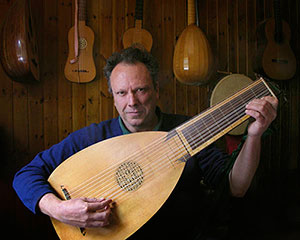
Luigi
Biagini was born in 1954 in Carrara, where
he still lives today.
He started taking photographs and printing in the dark
room in 1968, initially using a 35 mm camera. He later
progressed to medium and large formats, preferring black
and white landscape photography. He has studied and
applied Ansel Adams' zonal system since 1986.
The innate love for his mountains and particularly for
the marble quarries and marble "as
a material which captures light and reflects it, multiplying
it", encouraged him to carry out, for a long time, from
1970 to the early 90s, a strongly topical research into
the landscape, quarrymen and crafting in sculpture workshops.
Witness
of time, he observes the passage of the marble cutting
technique from helicoid wire to diamond wire (in the
late 80s), and also the radical change in the landscape
of the quarries; numerous roads are surfaced, signposts
are put up and properties are cordoned off with gates
and wire fences.
The romantic landscape of the quarry changes, so Luigi
Biagini stops taking photographs of them and begins
to look at marble in its essence, as a contrast of light
and shade, creating natural shapes of abstract and figurative
sculptures on its skin.
Since
the end of the 80s, he has also carried out a photographic
"research" activity, focusing on the Tuscan
countryside which was probably beginning to
undergo a phase of irreversible change. Thus he intensifies
his observation, to immortalise atmospheres, but also
to sensitise public opinion to prevent the indiscriminate
devastation of the landscape.
He is currently completing his research into the Vie
Bianche (White Roads) of the Tuscany, Umbria and Emilia-Romagna
countryside. If his pictures are able to do
nothing to prevent asphalt and concrete from advancing
through the countryside, they will definitely remain
as a historical memory of the landscape...
He also works as a landscape photographer, developing
artistic, architectural and social projects. Since 2006
he photographs the italian landscape of the Divine
Comedy.
His work has been included in numerous publications
in Italy and abroad, and in the monographs of numerous
artists.
In addition to photography, he has a passion for early
music and plays renaissance and baroque lutes. He gave
various concert, playing solo and in ensemble together "La Sesqvialtera". He currently composes music using different styles such as Early Music, Romantic, Ethnic and rearranged Ballads, written in the 1970s.
www.luigibiagini.com/music |